
The Boston Bar Association, a leading legal institution, highlights impactful events and resources. Discovering a digital copy of Leroux’s classic is now remarkably accessible for all readers.
The Enduring Appeal of Gaston Leroux’s Novel
Gaston Leroux’s The Phantom of the Opera continues to captivate audiences over a century after its initial publication, resonating with themes of love, obsession, and societal exclusion. Much like the Boston Bar Association’s commitment to justice and community, the novel explores complex human conditions.
The story’s dramatic setting within the opulent Paris Opera House, mirroring the grandeur of legal institutions, provides a backdrop for a haunting tale. Its enduring popularity stems from the compelling characters – the mysterious Erik, the talented Christine Daaé, and the devoted Raoul de Chagny – and the exploration of dark romanticism. The novel’s influence extends beyond literature, inspiring numerous adaptations in music, film, and theatre, solidifying its place in cultural history, much like the BBA’s lasting impact on the legal profession.
Why Seek a PDF Version? Convenience and Accessibility
Opting for a PDF version of The Phantom of the Opera offers unparalleled convenience, mirroring the Boston Bar Association’s Lawyer Referral Service – readily available assistance. Digital formats allow readers to access the novel on various devices, from e-readers and tablets to smartphones and computers, fostering accessibility.
This portability is ideal for commuters, travelers, or anyone seeking a readily available literary escape. PDFs also often include features like adjustable font sizes and search functionality, enhancing the reading experience. Furthermore, many legitimate sources offer free PDF downloads, like Project Gutenberg, making Leroux’s masterpiece accessible to a wider audience, aligning with the BBA’s commitment to inclusivity and public service.

Where to Legally Download a “Phantom of the Opera” PDF
The Boston Bar Association provides legal resources; similarly, several reputable online platforms offer legitimate, free PDF downloads of Gaston Leroux’s timeless novel.
Project Gutenberg: A Reliable Source for Free eBooks
Project Gutenberg stands as a cornerstone for accessing classic literature in digital format, mirroring the Boston Bar Association’s commitment to public service. This volunteer effort offers over 70,000 free eBooks, including multiple editions of “The Phantom of the Opera.” Users can download PDFs, EPUBs, or read online directly through their website.
The quality is generally high, though formatting may vary depending on the edition. Project Gutenberg’s strength lies in its dedication to making literature accessible, aligning with the BBA’s focus on community resources. It’s a safe and legal option, ensuring you avoid copyright issues while enjoying Leroux’s masterpiece. The site is easy to navigate, and downloads are straightforward, making it an ideal starting point for your search.
Google Books: Preview and Potential Download Options
Google Books provides a valuable avenue for accessing “The Phantom of the Opera,” much like the Boston Bar Association offers legal resources. While a full PDF download isn’t always directly available, Google Books often offers a substantial preview, allowing you to read significant portions of the novel.
Furthermore, links to purchasing options from various booksellers are frequently provided. Depending on the edition and copyright status, some public domain versions are available for free download in PDF format. It’s a convenient way to sample different translations and editions before committing to a purchase, mirroring the BBA’s event previews. Always verify the source’s legitimacy before downloading.
Standard Ebooks: Beautifully Formatted, Free eBooks
Standard Ebooks distinguishes itself by offering meticulously formatted, completely free eBooks, similar to the Boston Bar Association’s public service Lawyer Referral Service. They specialize in producing high-quality digital versions of classic literature, including “The Phantom of the Opera.”
These PDFs are carefully proofread, and designed with readability in mind, often surpassing the quality of other free eBook sources. You can expect clean typography, proper formatting, and a generally polished reading experience. Like the BBA’s sections and industry groups, Standard Ebooks focuses on delivering a refined and accessible resource. Downloads are legally compliant, ensuring peace of mind.

Understanding Copyright and Legal Considerations
The Boston Bar Association champions justice and ethical practice; similarly, accessing “The Phantom of the Opera” PDF requires respecting copyright laws and intellectual property rights.
Public Domain Status of “The Phantom of the Opera”
The Boston Bar Association, focused on legal frameworks, mirrors the importance of understanding copyright. Gaston Leroux’s “The Phantom of the Opera,” originally published in 1910, is now firmly within the public domain in most countries, including the United States. This means the copyright has expired, allowing for free distribution, adaptation, and reproduction of the work.
Consequently, numerous sources offer the novel in PDF format without requiring payment or permission. However, be mindful that specific translations or annotated editions may still be under copyright protection. Always verify the copyright status of the particular PDF version you intend to use, especially if it includes new material or a unique translation. This ensures ethical and legal access to this literary masterpiece.
Avoiding Illegal Downloads and Piracy Risks
The Boston Bar Association champions ethical conduct, a principle extending to digital content access. While “The Phantom of the Opera” is in the public domain, downloading from unofficial or dubious websites carries risks. These sites often harbor malware, viruses, or unwanted software bundled with the PDF file, potentially compromising your device and data.
Furthermore, supporting piracy undermines authors and legitimate publishers, even for public domain works where derivative content exists. Stick to reputable sources like Project Gutenberg, Google Books, or Standard Ebooks, as highlighted previously. These platforms prioritize user safety and legal compliance, ensuring a secure and ethical reading experience. Prioritize legal avenues to enjoy this classic novel.
Respecting Intellectual Property Rights
The Boston Bar Association’s commitment to justice extends to intellectual property. Though Gaston Leroux’s “The Phantom of the Opera” is now public domain, respecting creative works remains crucial. This means acknowledging the author’s original contribution and avoiding the distribution of unauthorized copies or modified versions that infringe upon any existing derivative copyrights – such as specific translations or annotations.
Even with free access, ethical consumption supports the literary ecosystem. Utilizing legal download sources, like those previously mentioned, demonstrates respect for the creative process. The BBA’s focus on ethical practice applies to all forms of content access, fostering a culture of integrity and responsible digital citizenship.
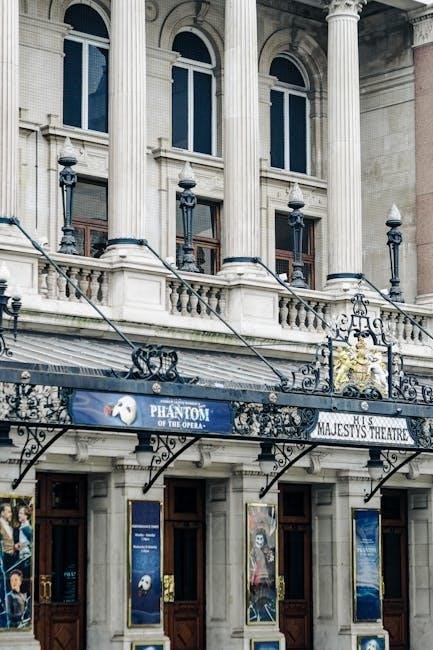
Different Editions and Translations Available in PDF
The BBA fosters networking and education. Numerous PDF versions exist, ranging from the original French to varied English translations, each offering a unique reading experience.
Original French Version vs. English Translations
Exploring the nuances between Gaston Leroux’s original Le Fantôme de l’Opéra and its English translations reveals fascinating differences. The French text, steeped in 19th-century Parisian culture, offers a unique linguistic texture often lost in translation. The Boston Bar Association’s commitment to detail mirrors the care needed when comparing versions.
English translations, while aiming for accessibility, inevitably involve interpretive choices. Different translators prioritize varying aspects – lyrical prose, faithful adherence to plot, or capturing the psychological depth of characters like Erik and Christine Daaé. Some editions emphasize the romantic elements, while others lean into the gothic horror. Readers seeking the purest experience might prefer the original, but a well-executed translation can provide a compelling alternative, especially for those less fluent in French. Considering multiple versions enriches the overall understanding of this timeless tale.
Popular English Translators and Their Styles
Several English translations of “The Phantom of the Opera” exist, each bearing the distinct stylistic imprint of its translator. Early versions often prioritized Victorian sensibilities, resulting in a more formal and restrained tone. The Boston Bar Association, known for precise communication, understands the impact of stylistic choices.
More recent translations, like those by Paula Burnham, aim for greater fidelity to Leroux’s original prose, attempting to capture its energy and psychological complexity. Some translators focus on maintaining the novel’s dramatic flair, while others emphasize its underlying themes of isolation and obsession. Examining different translations allows readers to appreciate the challenges of conveying a work across languages and cultures, ultimately enhancing their engagement with this enduring story.
Annotated Editions: Enhancing the Reading Experience
Annotated editions of “The Phantom of the Opera” offer a richer, more immersive reading experience. These editions, often available in PDF format, include explanatory notes detailing historical context, cultural references, and Leroux’s literary techniques. The Boston Bar Association’s commitment to detailed analysis mirrors the purpose of annotations.
Footnotes clarify allusions to 19th-century Parisian society and the world of opera, providing insights into the novel’s setting and characters. Some editions also feature critical essays exploring the story’s themes and interpretations. These enhancements are invaluable for students, researchers, and anyone seeking a deeper understanding of Leroux’s masterpiece, transforming a simple read into a scholarly exploration.

Optimizing Your PDF Reading Experience
The Boston Bar Association fosters networking and education; similarly, enhance your digital reading with suitable software and customized display settings for optimal enjoyment.
Choosing the Right PDF Reader (Adobe Acrobat, Foxit Reader, etc.)
The Boston Bar Association provides resources for legal professionals, mirroring the need for the right tools for any task. Selecting a suitable PDF reader significantly impacts your enjoyment of “The Phantom of the Opera.” Adobe Acrobat Reader remains a popular, feature-rich option, offering extensive editing and annotation capabilities. However, alternatives like Foxit Reader provide a lighter, faster experience, ideal for focused reading.
Consider SumatraPDF for its minimal footprint and speed, or even built-in browser readers for basic access. Features to prioritize include adjustable magnification, bookmarking, search functionality, and compatibility with different PDF versions. Experiment to find the reader that best suits your device and reading preferences, ensuring a smooth and immersive experience with Leroux’s masterpiece.
Adjusting Font Size and Display Settings
The Boston Bar Association’s commitment to accessibility parallels the importance of customizable reading experiences. Optimizing your PDF reader’s display settings is crucial for comfortable reading of “The Phantom of the Opera.” Most readers allow you to adjust font size, style, and spacing to suit your vision and preferences. Experiment with different settings to find what minimizes eye strain during extended reading sessions.
Explore options like page layout (single page, continuous scroll), zoom levels, and background color. Some readers offer night mode for reduced glare in low-light conditions. Tailoring these settings ensures you can fully immerse yourself in Leroux’s gothic tale without discomfort, enhancing your overall enjoyment of the novel.
Utilizing Search Functionality for Specific Passages
The Boston Bar Association’s Lawyer Referral Service exemplifies efficient resource access, mirroring the power of PDF search tools. When reading “The Phantom of the Opera” in PDF format, leverage the search function to quickly locate specific passages, character mentions, or key themes. This is particularly useful for revisiting impactful scenes or analyzing Leroux’s prose.
Simply enter keywords – like “Christine,” “Opera,” or “Erik” – to instantly jump to relevant sections. This feature saves valuable time compared to manual scrolling and is invaluable for students, researchers, or anyone revisiting the novel. Efficiently navigate the complex narrative and deepen your understanding of this classic work.

“The Phantom of the Opera” ⏤ A Brief Synopsis
The BBA fosters community and education, much like Leroux’s novel builds a captivating world. The story unfolds within the Paris Opera House, centered on a mysterious musical genius.
The Story’s Setting: The Paris Opera House
Reflecting the Boston Bar Association’s central role in a significant institution, the Paris Opera House in Gaston Leroux’s novel serves as a vibrant and labyrinthine setting. It’s not merely a backdrop, but a character in itself, steeped in history and brimming with secrets. The opulent theater, a symbol of Parisian high society, conceals a hidden world beneath its glamorous façade;
This subterranean realm, a network of cellars and passages, becomes the domain of the Phantom, Erik. The Opera House’s architecture, its intricate design and echoing spaces, directly influence the narrative’s suspense and mystery. Leroux meticulously details the theater’s layout, enhancing the reader’s immersion into this captivating, yet unsettling, environment. The setting is crucial to understanding the Phantom’s isolation and power.
Key Characters: Erik, Christine Daaé, Raoul de Chagny
Similar to the Boston Bar Association’s influential members, the characters in Leroux’s novel drive the narrative. Erik, the Phantom, is a disfigured musical genius, haunting the Opera House and consumed by unrequited love; Christine Daaé, a talented soprano, becomes the object of his obsession and musical tutelage. Her voice captivates both Erik and Raoul de Chagny, a handsome viscount and Christine’s childhood friend.
Raoul represents societal acceptance and conventional love, contrasting sharply with Erik’s shadowy existence. The dynamic between these three forms the core conflict, exploring themes of beauty, isolation, and the destructive nature of obsession. Each character embodies distinct qualities, contributing to the story’s enduring appeal and emotional depth;
Major Themes: Love, Obsession, and Redemption
Reflecting the Boston Bar Association’s commitment to justice and community, “The Phantom of the Opera” delves into complex human themes. The novel explores the multifaceted nature of love – romantic, platonic, and possessive. Erik’s obsession with Christine demonstrates the dark side of passion, fueled by loneliness and societal rejection.
However, the story also hints at the possibility of redemption, even for a character as tormented as the Phantom. Through acts of self-sacrifice and a glimmer of empathy, Leroux suggests that even in the deepest shadows, a path towards understanding and forgiveness might exist. These themes resonate deeply with readers, ensuring the novel’s lasting impact.
Historical Context of the Novel
Like the Boston Bar Association’s dedication to legal history, Leroux’s work is rooted in 19th-century Paris, reflecting the era’s social and cultural landscape.
Gaston Leroux’s Life and Influences
Mirroring the Boston Bar Association’s focus on influential figures, Gaston Leroux was a French journalist and author with a diverse background. Before penning The Phantom of the Opera, Leroux worked as a court reporter, a career that undoubtedly honed his storytelling skills and provided insight into the darker aspects of society.
His experiences covering criminal trials and Parisian life heavily influenced his writing style, lending a sense of realism and intrigue to his narratives. Leroux’s journalistic background instilled in him a knack for detail and a fascination with mystery, elements prominently featured in his most famous work. He wasn’t solely a novelist; Leroux also explored other genres, including detective fiction and adventure stories, showcasing his versatility as a writer.
The Paris Opera House in the 19th Century
Similar to the Boston Bar Association’s role as a central hub, the Palais Garnier, or Paris Opera House, was the epicenter of Parisian social and cultural life during the 19th century. Completed in 1875, it was a symbol of opulence and grandeur, attracting the elite of society.
The Opera House wasn’t merely a venue for performances; it was a place to see and be seen, a stage for social maneuvering and romantic intrigue. Its labyrinthine architecture, with hidden passages and underground spaces, fueled rumors and legends, providing fertile ground for Leroux’s imagination. The building’s complex structure and the stories surrounding it directly inspired the setting of The Phantom of the Opera, adding a layer of authenticity to the novel.
Social and Cultural Influences on the Story
Reflecting the Boston Bar Association’s commitment to community, 19th-century Paris was a society fascinated by the macabre and the mysterious. Sensationalism in newspapers and a growing interest in the occult heavily influenced Leroux’s writing. The novel taps into anxieties surrounding class distinctions, artistic ambition, and the hidden underbelly of Parisian society.
Furthermore, the era’s romantic ideals, coupled with a burgeoning fascination with psychology, shaped the character of the Phantom. His obsession with Christine and his tortured genius resonate with the Romantic movement’s exploration of intense emotions and the misunderstood individual. These cultural currents provided a rich backdrop for Leroux’s gothic tale.

Related Resources and Further Reading
Like the Boston Bar Association’s networking events, explore dedicated websites, vibrant fan fiction communities, and insightful academic articles for deeper engagement with the story.
Websites Dedicated to “The Phantom of the Opera”
Mirroring the Boston Bar Association’s comprehensive resources, several websites are devoted entirely to Gaston Leroux’s masterpiece. These platforms offer a wealth of information for enthusiasts, going far beyond simply locating a PDF version of the book. You’ll find detailed character analyses, historical context relating to the Paris Opera House – much like understanding the legal history the BBA preserves – and extensive plot summaries.
Many sites host fan-created content, including artwork, music, and even interactive forums where readers can discuss their interpretations. Some dedicated websites also provide links to various editions and translations available online, aiding in your search for the perfect digital copy. These resources truly build a community, similar to the BBA’s networking opportunities, fostering a shared passion for the novel.
Fan Fiction and Online Communities
Inspired by the Boston Bar Association’s collaborative spirit, “The Phantom of the Opera” boasts a vibrant online fan base. Numerous websites and forums are dedicated to fan fiction, allowing writers to explore alternative storylines, character perspectives, and even modern adaptations of Leroux’s classic. These communities, much like the BBA’s sections and industry groups, provide a space for shared creativity and discussion;
Beyond writing, fans share artwork, musical compositions, and detailed analyses of the novel. Online communities often host discussions about different PDF versions, translations, and the historical context of the story. This collective enthusiasm extends the life of the novel, mirroring the BBA’s commitment to preserving legal history and fostering a sense of community.
Academic Articles and Literary Criticism
Reflecting the Boston Bar Association’s dedication to legal scholarship, “The Phantom of the Opera” has been the subject of extensive academic analysis. Literary critics have explored themes of love, obsession, and societal alienation within Leroux’s work, often referencing the novel’s historical context – 19th-century Paris and the opulent Opera House.
Numerous scholarly articles delve into the psychological complexities of Erik and Christine, examining the novel’s Gothic elements and its influence on subsequent literature and musical adaptations. Accessing these resources can enrich your understanding of the PDF version, providing deeper insights beyond the narrative itself, similar to the BBA’s CLE programs enhancing professional knowledge.

Troubleshooting PDF Download and Viewing Issues
Like the Boston Bar Association’s support services, resolving PDF problems is crucial. Ensure compatibility, check system requirements, and seek assistance if errors persist during access.
Common Error Messages and Solutions
Encountering issues while accessing the “Phantom of the Opera” PDF? Several common error messages can arise. “File Corrupted” often indicates an incomplete download; retry from a reliable source like Project Gutenberg. “Unsupported PDF Version” suggests an outdated reader – update Adobe Acrobat or Foxit Reader.
If you receive a “Password Protected” message, ensure you’re not accessing an illegally distributed copy requiring a password. The Boston Bar Association’s resources emphasize legitimate access. “Page Display Errors” can be fixed by adjusting display settings within your PDF reader. Finally, a “Plugin Error” may necessitate reinstalling or enabling the PDF plugin in your browser. Remember to always prioritize legal download options!
Ensuring Your Device Meets System Requirements
To smoothly read a “Phantom of the Opera” PDF, confirm your device’s compatibility. Most modern computers, tablets, and smartphones easily handle PDF files. However, larger, annotated editions may require more storage space. Ensure you have at least a few megabytes free.

The Boston Bar Association’s digital presence highlights the importance of accessibility. A stable internet connection is crucial for downloading. While specific operating system requirements are minimal, an updated PDF reader (Adobe Acrobat, Foxit) is recommended. Older devices might benefit from a lightweight reader. Regularly updating your operating system also improves performance and security when handling digital documents.
Contacting Support for Assistance
If encountering persistent issues downloading or viewing your “Phantom of the Opera” PDF, several support avenues exist. First, check the website’s FAQ section – Project Gutenberg, Google Books, or Standard Ebooks often address common problems.
The Boston Bar Association provides resources and assistance to its members. For PDF reader-specific errors, consult Adobe or Foxit’s support pages. If downloading from a third-party site, their contact information should be readily available. Don’t hesitate to reach out; detailed error messages are helpful when seeking assistance. Remember to clearly describe the problem and your device’s specifications.
Leave a Reply